
Unequal Treaties
European Colonial Treaty‑Making in Asia, AD 1800‑1950
Between the battle of Trafalgar and the Korean War, Europe’s war‑ships and diplomats imposed a labyrinth of “friendship and commerce” pacts upon Asian courts. These agreements—signed under unequal threat of force—redrew borders, opened ports, and upended centuries‑old concepts of sovereignty from Istanbul to Edo.
Ancient Traditions of Treaty‑Making
Long before European broadsides echoed across Asian harbours, Asian rulers forged sophisticated diplomatic compacts. Chandragupta Maurya’s treaty with Seleucus I in 303 BC exchanged 500 war‑elephants for Afghan satrapies and a marriage alliance; Han China’s heqin peace‑marriages after 198 BC bound Xiongnu steppe lords to the Middle Kingdom; and the Song–Liao accord of AD 1005 institutionalised annual tribute for a century of stability. These arrangements rested on reciprocity among near‑equals—a balance that would collapse once industrial Europe arrived with steam and steel.
The Nineteenth‑Century Collision
By AD 1800, Britain, France, Russia and the Netherlands sought Asian markets yet bristled at Chinese tariffs, Japanese seclusion, Burmese monopolies and Persian tolls. Armed with Paixhans shell‑guns, British and French squadrons could obliterate timber forts in a single afternoon. The resulting treaties standardised a new legal architecture: low fixed import duties of three‑to‑five percent, extraterritorial courts for Europeans, indemnities payable in silver and, crucially, the most‑favoured‑nation clause that multiplied every concession across all signatories. What Asian chroniclers later dubbed “unequal treaties” had begun.

Qing China’s Century of Humiliation
When the First Opium War ended in AD 1842, the Qing court relinquished Hong Kong, opened five coastal “treaty ports” and fixed the customs tariff at five percent—catastrophic for a fiscally strapped empire. A supplementary accord in 1843 placed all British subjects beyond Chinese jurisdiction. Far from settling matters, these terms whetted foreign appetite. Anglo‑French forces burned the Summer Palace in 1860 after the Second Opium War and forced another series of treaties that legalised opium, permitted missionaries inland and opened the Yangtze up to Hankou. In the north, Russia extracted Amur territories through the Treaties of Aigun and Peking (1858‑60), while in the south the French Treaty of Saigon (1862) carved Cochinchina from Vietnam—long a Qing tributary state. Chinese scholars soon spoke of a “Hundred Years of National Humiliation”, a phrase still alive in Beijing’s foreign‑policy rhetoric.

Japan: From Opening to Empire
Commodore Matthew Perry’s squadron anchored off Edo Bay in AD 1853 and delivered a presidential ultimatum: open ports or face force. The Convention of Kanagawa (1854) broke two centuries of sakoku seclusion; the Harris Treaty (1858) slashed tariffs and granted Americans extraterritoriality. Britain, France, Russia and the Netherlands copied the template within months. Samurai outrage toppled the shogunate in the Meiji Restoration of 1868, and the new government modernised with feverish speed—railways, conscript armies, Western jurisprudence. By 1911 Tokyo had renegotiated every clause and, in a brutal reversal, imposed its own unequal Treaty of Shimonoseki on defeated Qing China in 1895, annexing Taiwan and demanding an indemnity twice the Qing annual revenue.
The Company Raj in the Sub‑continent
On 12 August 1765 the Mughal emperor placed his seal on the Treaty of Allahabad, granting the East India Company tax collection rights in Bengal—a fiscal juggernaut that soon financed conquest across the region. Successive subsidiary‑alliance treaties saddled defeated princes with British garrisons at their expense and forbade independent diplomacy. The Maratha Peshwa’s Treaty of Bassein in 1802, the Sikh capitulation in 1849 and dozens of minor pacts turned sovereign courts into puppet regimes. After the Indian Rebellion of 1857 the Crown swept away Company charters; remaining princely states survived only under ever‑narrower treaties until independence in 1947 rendered the edifice obsolete.
Burma’s Three Wars and Three Cessions
The Treaty of Yandabo (1826) ended the First Anglo‑Burmese War by detaching Assam, Manipur, Arakan and Tenasserim and imposing a million‑pound indemnity—an economic wound that bled the Konbaung treasury. Britain seized the rice‑rich Irrawaddy delta after a brief war in 1852 and, citing alleged insults in Mandalay, finished the job in 1885. No final treaty marked that conquest; British columns simply declared Upper Burma a province of India, a stark illustration of how treaty diplomacy could mutate into outright annexation.
Siam’s Calculated Compromises
Alone among mainland kingdoms, Siam (modern Thailand) remained formally independent. King Mongkut’s Bowring Treaty of 1855 capped import duties at three percent and conceded extraterritorial courts to the British, terms replicated for France and the United States. These sacrifices of fiscal and legal autonomy bought time for modernisation and diplomatic juggling between rival empires. Extraterritoriality was finally abolished in the 1920s, allowing Siam to re‑enter the world order on more equal footing.

French Designs on Indochina
French gunboats captured Saigon in 1859; the Treaty of Saigon (1862) forced Emperor Tự Đức to cede the Mekong delta, guarantee missionary freedom and pay indemnities. A decade later France unilaterally annexed three more southern provinces, then pushed north to make Tonkin and Annam protectorates after 1883. Cambodia signed its own protectorate treaty in 1863, and Laos followed in 1893, completing the patchwork of French Indochina. Unlike Siam’s single strategic compromise, Vietnam endured a cascade of treaties that dismantled sovereignty piece by piece.
Korea and the Lesson of Ganghwa
Fortress Korea watched China and Japan’s fates with alarm yet proved unable to repel Japanese gunboats at Ganghwa in AD 1876. The resulting treaty declared Korea an “independent” state, opened three ports and granted Japan extraterritoriality—the first wedge of foreign influence. Western powers soon demanded similar terms. Within a single generation Korea lost tariff autonomy, then political independence, and in 1910 was annexed outright by Tokyo, highlighting how unequal treaties often formed the legal bridge to colonial rule.
Persia, Afghanistan & the Great‑Power Frontier
Defeat in two Russo‑Persian wars forced Tehran to sign the Treaties of Gulistan (1813) and Turkmenchay (1828), surrendering the Caucasus, paying gold indemnities and granting Russians sweeping commercial privileges. One notorious clause allowed the Tsar to approve each heir to the Persian throne—a humiliation Iranians still invoke when criticising modern concessions. Eastward, Britain compelled the Treaty of Gandamak (1879) on Afghanistan, dictating Kabul’s foreign policy, and later drew the contentious Durand Line (1893), bisecting Pashtun homelands. Both treaties remain flash‑ points in twenty‑first‑century geopolitics.

How Unequal Treaties Changed Asia
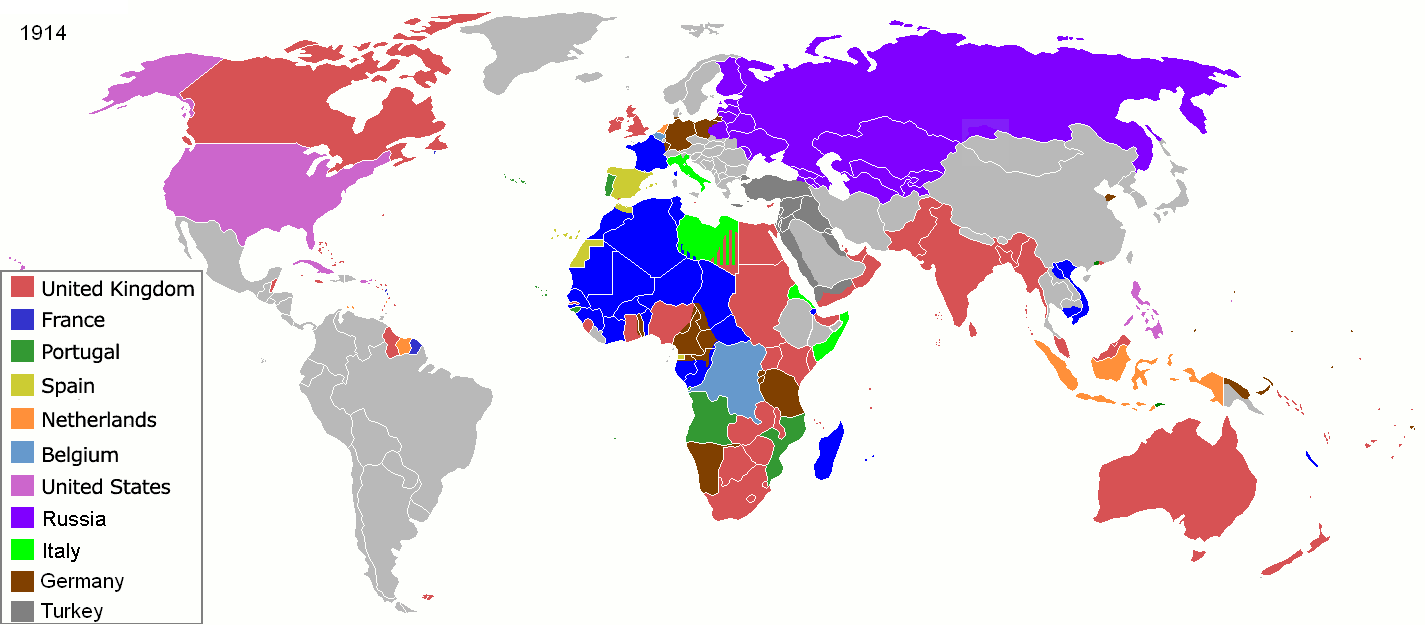
The combined effect of these agreements was seismic. Vast tracts of land—Hong Kong, Taiwan, Lower Burma, Cochinchina, the Caucasus—were ceded outright. Customs revenues evaporated under single‑digit tariff ceilings, stripping governments of their fiscal sinews just as they confronted modern pressures. Foreign nationals lived under their own consular courts, a daily reminder that Asian law was deemed inferior. Missionaries gained freedom of movement, often colliding with local customs and fueling cultural backlash. Politically, the treaties fractured legitimacy: Chinese statesmen founded the Self‑Strengthening Movement; Japanese reformers toppled the shogunate; Siamese modernisers raced to Westernise their legal code; Indian princes realised gilded promises of alliance masked real subjugation. Everywhere, humiliation seeded nationalism.
Post‑Colonial Reckonings
Between 1943 and 1999 every surviving unequal treaty was repudiated. Washington and London voluntarily surrendered extraterritoriality in China during World War II; India voided Britain’s princely alliances at independence; France abandoned its protectorates after Dien Bien Phu; Hong Kong and Macau reverted to Chinese sovereignty in 1997 and 1999. Yet the memory endures: in Beijing, references to Nanjing shape hard‑line stances on trade talks; in Tehran, “no second Turkmenchay” is a rallying cry whenever concessions loom; in Kabul, politicians still reject the Durand Line. The treaties may be dead, but their ghosts patrol border disputes, tariff policies and national curriculums across a continent.
Conclusion
In the nineteenth century, parchment signed at cannon‑point spared Asian capitals from siege yet quietly transferred territory, revenue, and legal authority to Europe. Those same documents later became beacons of grievance that galvanised reform, revolution and ultimately decolonisation. Today, Asian diplomats meet their former colonisers as technical equals, but the historical muscle memory of unequal treaties remains: a caution against complacency, a spur to self‑reliance and, when necessary, a reminder that treaties last only so long as both parties believe them fair.